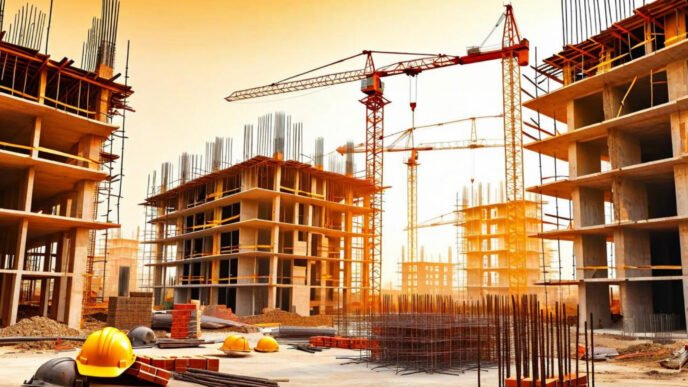

Mumbai, March 2026 – The Maharashtra Housing and Area Development Authority (MHADA) has announced a renewed push to redevelop ageing housing layouts across Mumbai, Pune, and Nashik, marking a significant strategic shift from new greenfield construction toward brownfield urban renewal. Many of these layouts are over four decades old and require redevelopment to upgrade infrastructure and living standards and MHADA is now working to create a framework that encourages private developer participation while ensuring affordable housing continues to be created as part of these developments. Simultaneously, the authority has prepared a rental housing policy that has been submitted to the Maharashtra state government for approval, addressing a long-standing gap in India’s urban housing ecosystem. Strong response to housing lotteries and higher redevelopment premiums have improved MHADA’s financial position, enabling it to expand redevelopment and housing initiatives across Maharashtra.
Brownfield Renewal as the New Supply Strategy
MHADA has constructed nearly nine lakh homes across Maharashtra over the years, including around 2.5 lakh housing units in Mumbai alone. Redevelopment of older housing clusters is now being seen as the next phase in its housing strategy, especially in cities where housing demand remains high.
The logic is structural. In cities like Mumbai, Pune, and Nashik, large vacant land parcels are no longer available at viable costs making brownfield redevelopment the only scalable route to meaningful new housing supply in well-located, established urban areas. Projects located in well-developed areas continue to attract demand as they already have access to transport networks, social infrastructure and employment centres which is why redevelopment has become an important tool for adding new housing stock in cities where large vacant land parcels are limited.
Priority Projects in Mumbai
MHADA is advancing several large redevelopment projects within Mumbai, including major housing layouts such as Motilal Nagar which spreads across approximately 114 acres along with Adarsh Nagar in Worli, Bandra Reclamation, and SV Nagar. Many of these projects have reached advanced planning stages and are expected to move towards the tendering phase in the near future. Each of these sites represents not just a housing renewal opportunity but a significant urban land parcel in established, well-connected Mumbai neighbourhoods making them among the most consequential redevelopment sites currently in any Indian city’s pipeline.
Rental Housing Policy: Addressing a Structural Gap
Alongside its redevelopment push, MHADA’s proposed rental housing policy represents a rare institutional acknowledgement that India’s housing ecosystem has historically been skewed almost entirely toward ownership. The policy aims to expand rental housing options in urban areas where purchasing a home has become difficult for many people due to high property prices expected to benefit students, working professionals, working women, senior citizens, and people who move temporarily.