The Uttar Pradesh government has formally earmarked ₹750 crore for Noida International Airport at Jewar in its 2026-27 state budget, with the bulk directed at land acquisition for future expansion phases. Of this, ₹700 crore is allocated for land acquisition and ₹50 crore for construction works to support Phase 3 and Phase 4 development. The airport allocation is part of a larger ₹2,111 crore civil aviation budget for Uttar Pradesh, reflecting the state’s commitment to airport-led infrastructure growth. Phase 1 construction has already been completed by Yamuna International Airport Private Limited, a Zurich Airport AG subsidiary with DGCA aerodrome licensing and inauguration by Prime Minister Modi expected in early 2026. The budget allocation removes a key funding uncertainty around the airport’s long-term expansion roadmap.
Key Highlights
- ₹750 crore allocated in UP Budget 2026-27 specifically for Noida International Airport, Jewar
- ₹700 crore for land acquisition and ₹50 crore for construction to support Phase 3 and 4
- Total UP civil aviation budget stands at ₹2,111 crore for 2026-27
- Phase 1 Terminal capacity: 12 million passengers per annum across a 90,000 sq. metre terminal
- Full build-out across all four phases targets 152 million passengers annually at an estimated total project cost of ₹29,561 crore by FY50
Why This Micro-Market Matters
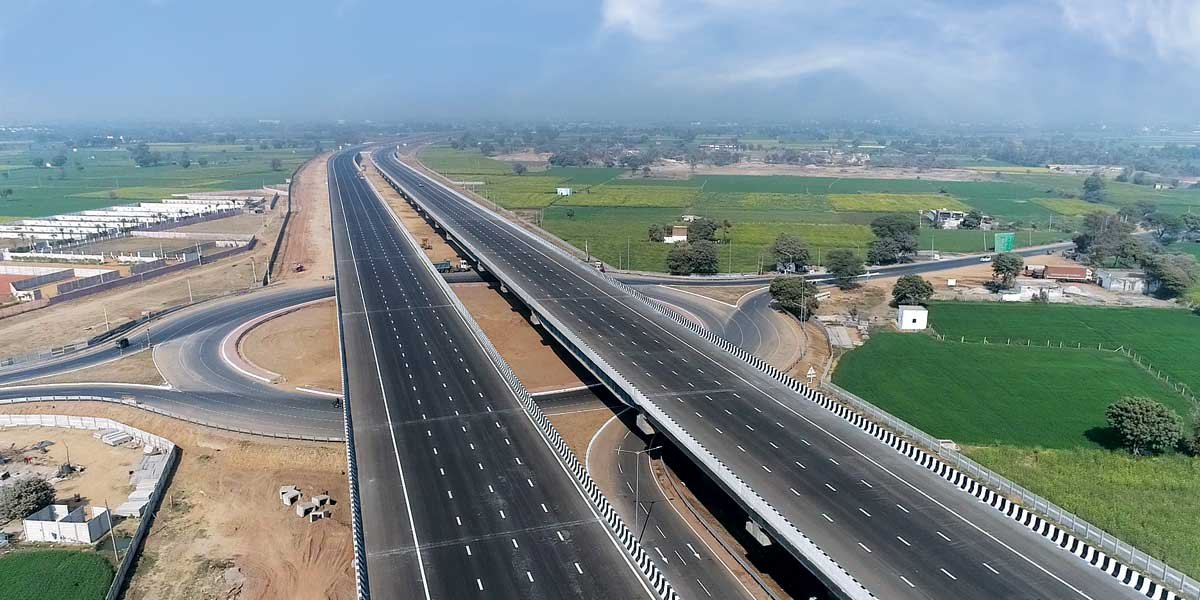
The Yamuna Expressway corridor between Greater Noida and Jewar has evolved from a peripheral land market into one of NCR’s most infrastructure-dense investment zones. Unlike speculative corridors that rely on a single future trigger, Jewar’s growth story is supported by multiple confirmed developments, a Film City, Medical Device Park, YEIDA industrial sectors, and an expanding logistics hub, all within a few kilometres of the airport boundary. Bus connectivity from UPSRTC, Haryana Roadways, and Uttarakhand Transport Corporation links the airport to Delhi, Gurugram, Faridabad, Agra, Mathura, and Aligarh, giving the zone a regional catchment that extends well beyond NCR commuters. This scale of multi-modal planning is rare outside of major metropolitan cores.
What Buyers and Investors Should Consider Now
The budget allocation confirms that state-level funding for Phases 3 and 4 is now formalised removing a key uncertainty that previously made longer-term investment projections harder to justify. For residential buyers, YEIDA’s ongoing plot schemes in sectors near the airport remain the most accessible and legally clean entry point into the corridor. For investors, the window before inauguration is historically the period of sharpest appreciation in airport-adjacent corridors is closing. Multi-modal connectivity plans including metro, Namo Bharat rail, RRTS, and a new 130-metre-wide expressway from Greater Noida to the airport’s eastern side are all either approved or under construction, making infrastructure risk in this corridor significantly lower than it was even 18 months ago.