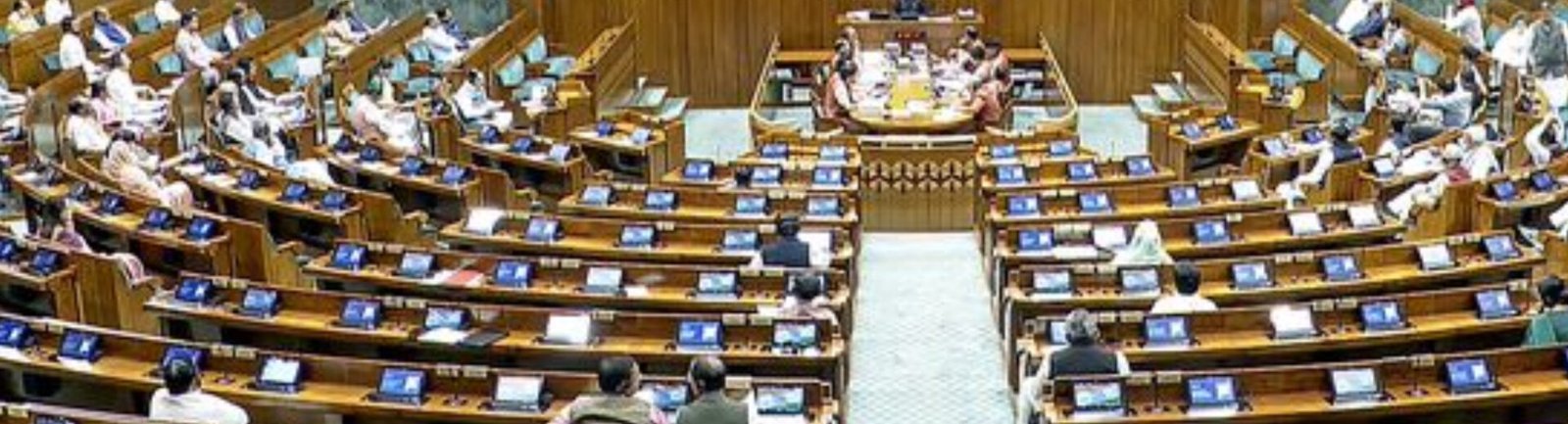

New Delhi, March 2026 – The Lok Sabha witnessed the introduction of the Jan Vishwas (Amendment of Provisions) Bill 2026 as the government renewed its push to decriminalise minor offences and advance a framework of trust-based governance aimed at improving ease of living and doing business. The Bill seeks to rationalise more than 1,000 offences, removing outdated and redundant provisions and improving the overall regulatory environment. Key measures include replacement of imprisonment provisions with monetary penalties or warnings, and graded enforcement mechanisms including warnings for first-time contraventions.
For Delhi’s real estate market, the most consequential provision is the proposed overhaul of property taxation in the New Delhi Municipal Council Act, 1994. The Bill proposes replacing the rateable value method of property tax with the Unit Area Method, introducing a transparent and formula-based system linked to property size, usage, and location.
From Rateable Value to Unit Area: What Changes for NDMC Properties
NDMC wants to replace the old, cranky “rateable value” method with the unit area method for calculating property tax. Markets like Connaught Place have been particularly vocal about this for years. Shop owners get taxed under the old rateable value system, and it hurts. They want the unit area method, arguing it’s more rational and adopting it means changing 47 provisions of the NDMC Act.
The Bill specifies that property tax will consist of a building tax and a vacant land tax. It establishes a Municipal Valuation Committee to recommend base value for vacant lands and buildings, and manner of determining and revising property tax. Additionally, the following offences will be punishable with imprisonment between one month and seven years, and a fine of at least 50% of tax evaded: wilful default in payment, wilful failure to file return on time, and furnishing wrong information in assessment. The Bill also removes provisions for levying advertisement tax.
The Broader Decriminalisation Framework
The Bill follows the withdrawal of the Jan Vishwas (Amendment of Provisions) Bill 2025 on March 18 after examination by a select committee. The withdrawal was intended to allow incorporation of stakeholder feedback and committee recommendations into a revised framework. The present Bill builds upon the Jan Vishwas Act, 2023, which decriminalised 183 provisions in 42 Central Acts. The 2026 version expands this to 717 provisions across 79 laws, covering amendments to the NDMC Act, Motor Vehicles Act, Legal Metrology Act, Drugs and Cosmetics Act, and others.