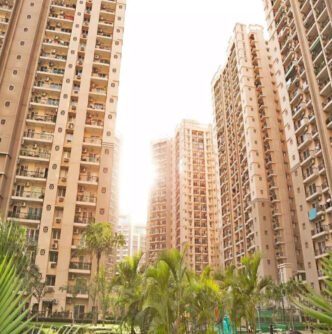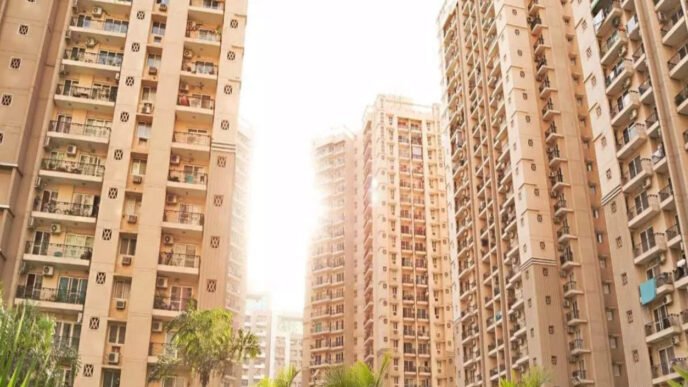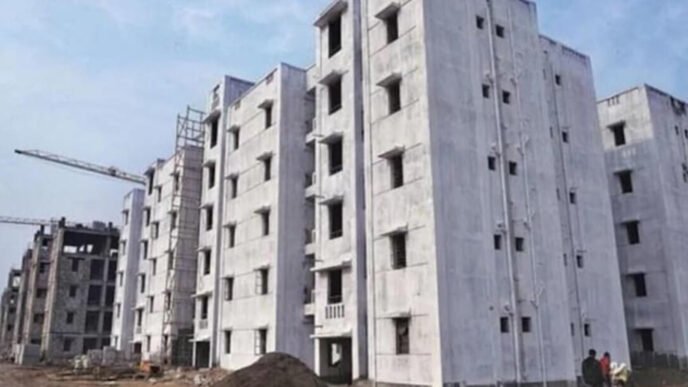

Chandigarh, March 2026 – The UT Administration of Chandigarh has notified revised collector rates across residential, commercial, agricultural, and village categories, effective April 1, 2026 and applicable through March 31, 2027. The sharpest increase has been recorded in the premium residential belt. Collector rates in Sectors 1 to 12 have been raised from ₹1.78 lakh to ₹2.37 lakh per square yard – a jump of 33.2%. Sectors 14 to 37 have seen a 22.8% rise (₹1.47 lakh to ₹1.81 lakh per sq yd), while sectors beyond 38 have been revised upward by around 4% to ₹1.33 lakh per sq yd. Independent dwelling units have been hiked by 21.8%, while “cheap house” category properties have seen a 24.3% increase, taking their benchmark value to ₹78.26 lakh. The commercial segment has witnessed headline-grabbing revisions. Ground floor rates in Elante Mall have been doubled from ₹15,600 to ₹31,200 per sq ft, the steepest jump in the entire schedule. Sector 17 continues to remain the city’s costliest commercial hub, with SCO/SCF rates rising 6.8% to ₹5.92 lakh per sq yd.
What Collector Rates Mean and Why This Revision Matters
Collector rates also known as circle rates are the minimum values at which property transactions can be registered with the government. They directly determine stamp duty calculations, when collector rates rise, the minimum stamp duty payable on any transaction rises proportionally, increasing the effective cost of buying property in Chandigarh. The revised rates, applicable till March 31, 2027, replace the existing structure in force since April 1, 2025, and will directly impact stamp duty calculations, pushing up the base cost for buyers.
Deputy Commissioner-cum-District Collector Nishant Kumar Yadav confirmed the rates are now notified and advised all buyers, sellers, and property stakeholders to factor the revised schedule into any transaction planned after April 1. The collector rates are available on the Chandigarh Administration website.
Location Context: Chandigarh’s Premium Property Market
Chandigarh’s planned sector layout designed by Le Corbusier, creates a clearly stratified property market. Sectors 1-12 represent the city’s most established and sought-after residential addresses, housing senior government officers, institutions, and premium residences. The 33.2% jump in this belt reflects both the significant appreciation these sectors have seen in recent years and the administration’s intent to align official valuations closer to actual market transactions. Sector 17 remains the commercial nerve centre, while Elante Mall on Industrial Area Phase 1 has become the city’s dominant retail asset, its doubled collector rate is a direct acknowledgement of its exceptional commercial performance.